
Pomodoro Study Technique
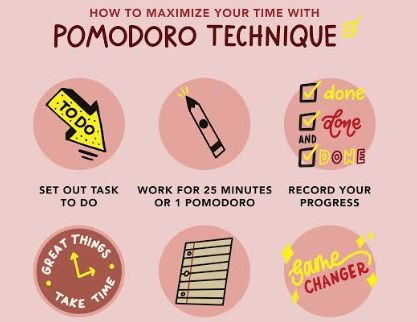
The Pomodoro Technique is a time management method that was developed by Francesco Cirillo in the late 1980s. It’s a popular technique for improving productivity and focus, especially for studying or working on tasks that require sustained attention. Here’s how it works:
- Choose a task: Select the task you want to work on. It could be studying, reading, writing, or any other activity that requires concentration.
- Set a timer: Set a timer for 25 minutes, which is called a “Pomodoro.” You can use a physical timer, a smartphone app, or an online timer.
- Work on the task: Focus on the chosen task and work on it diligently until the timer goes off. Try to eliminate distractions and stay focused during this time.
- Take a break: When the timer rings, take a short break of around 5 minutes. Use this time to rest, stretch, or do something enjoyable that helps you relax.
- Repeat the cycle: After the short break, start another Pomodoro by setting the timer for 25 minutes and continue working on the task. Repeat this cycle of focused work and short breaks.
- Long break: After completing four Pomodoros (four 25-minute work intervals), take a longer break of around 15 to 30 minutes. This break is meant to help you recharge and regain your focus.
- Continue the process: Repeat the Pomodoro cycles as needed until you complete your task or reach your study goal.
The key principle of the Pomodoro Technique is to break your work or study time into manageable intervals, allowing you to maintain concentration and prevent burnout. The frequent short breaks provide an opportunity for rest and help you avoid fatigue.
Remember, the Pomodoro Technique can be adjusted based on your preferences and needs. Some people may find that shorter or longer work intervals work better for them. Experiment with the technique and adapt it to suit your own productivity style.

 Mtu Kuzi
Leave a comment