
WONDERS WILL NEVER END;
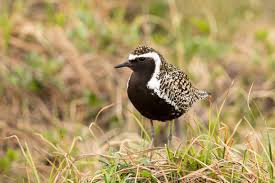
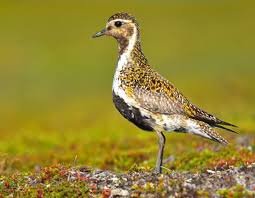
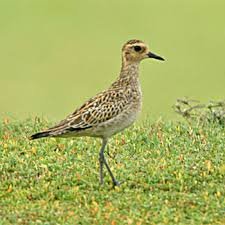
I want to draw your attention to a migratory bird and use it as an example of nature’s greatness- or mystery of nature. many things happen that we just take for granted without a moment’s thought. The story of a bird called the pacific golden plover might open our eyes to something that is impossible to understand and that we can only wonder about.
The pacific golden plover hatches in Alaska near the bering strait, but it overwinters on the island of Hawaii, 4500 kilometres away. After hatching, the birds learn to fly very quickly. Before they fly to Hawaii, they have an enormous appetite and put on 70g of weight in a short time so that they have enough energy for their journey. This increases their body weight by more than 50% and is equivalent to a person weighing 80kg suddenly increasing in weight to 120kg. The birds will fly from Alaska, all the way over the open sea.
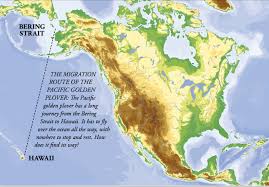
So, the pacific golden plover has a long migratory journey from the bering strait to Hawaii. It must fly over water all the way with no chance to stop and rest. How does it find its way?
The pacific golden plover is a terrible swimmer, so it has to stay in the air the whole time. There are no islands in the stretch of water where it can rest. The distance between Nairobi and Ankara, the capital of turkey, is 458km.The journey takes 88 hours and the birds must use their wings without stopping for three days and four nights. It has been estimated that each bird makes250,000 strokes of their wings on their journey. No person could manage to move their arms up and down that many times without stopping!
The pacific golden ploverflies at a constant speed of 51km/hr. scientists have discovered that is the best speed in terms of the most efficient use of birds energy reserves. Higher speeds and lower speed would increase the bird’s energy requirements and it would not have enough reserves to reach Hawaii. The pacific golden plover uses 0.6% of its body weight for every hour it is airborne. That means it uses 82.2g on its journey. So surely it put on too little weight before it left for its long trip? How will it be able to get there? Listen to this: for one reason or another, the pacific golden plover knows it must fly in groups in a V-formation. This way it uses 23% less energy. The strongest bird in the flock flies in front and the other birds constantly swap places with it. The further back in the formation a bird flies, the less energy it uses. Scientists have also discovered that birds that fly in V-formations have sensors that tell them exactly where they should be in relation to neighbouring birds in order to optimize their use of the air waves created by the other birds.
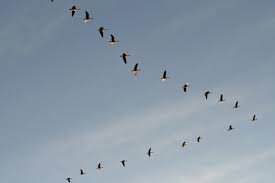
The pacific golden plover gets us to ask more questions; how does it know it must eat in such a way as to put on enough weight to last the whole journey? How does it know it must travel to Hawaii, a place it has never been before?How does it know the way? How does it stay on track despite the wind and weather? What kind of highly-tuned navigational system does it have? The birds have never been to school and learned about flying in V-formation. Who has taught them it is vital to fly in that formation? The answers are obvious—yes , there is only one real answer—the pacific golden plover must have been made that way. There must be an intelligent designer behind it!

 Mtu Kuzi
Leave a comment