
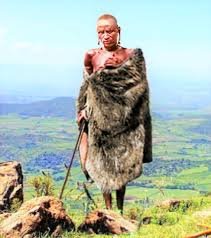
KOITALEL ARAP SAMOEI
In 1860, Koitalel Arap Samoei was born to Kimnyole Arap Turukat at Samitu in Aldai. He was the lastborn of four sons and belonged to the Kaplechach age set.
Having the ability to understand prophetic signs compared to his brothers, he was closest to his father.It is said that Kimnyole predicted his death and summoned his four sons as he saw his time approach and asked them to consult traditional brews in a pot. Upon gazing into the pot, Samoei drew his sword in protest as he had perceived the coming of the Europeans.
Sensing danger in his sons’ bravery and out of concern for his safety, Kimnyole sent Koitalel’s three siblings to live among the Kipsigis while he went to live among the Tugen.
After Kimnyole’s death, a section of Nandi people sent for Koitalel who had already taken refuge among the Keiyo. His brother Kipchomber Arap Koilege also lay claim to Nandi leadership, leading to a succession dispute. Groups formed around the two aspirants and minor skirmishes took place between their supporters, but this did not extend to full-scale war.
The dispute ended with the defeat of Kipchomber Arap Koilege in 1895, after which he fled to the Kipsigis with his supporters, becoming the first Kipsigis Orgoiyot.Koitalel was appointed the successor to his father as the Orkoryot (Prophet and Supreme Chief) of the Nandi people.
The Orkoiyot was traditionally from the Talai Clan of the Nandi people who were believed to have been picked by God, Asis, to deliver messages to the people.Koitalel prophesized about a black snake passing through the land of Nandi spitting fire.
His prophecy came to pass with the building of the Kenya Uganda railway by the British through Nandi land. The black snake was associated by many to been symbolic of the railway line.As the British approached the Nandi area, he rallied his men and fighting broke out marking the long resistance by the Nandi against the British.
The British were perceived as intruders who wanted to take their land by force. The Nandi were good fighters and did not fear facing the British guns.Koitalel was a very strategic fighter who organized and planned attacks against the British Army and the railway construction workers when least expected.
They also stole construction materials and used them to make ornaments.For twelve years, the British could not capture him nor stop the Nandi and were very humiliated. They called for a truce meeting on October 19, 1905, instead to negotiate with Samoei and each party was to come accompanied by five people. However, the British Colonel Richard Meinertzhagen did not keep the promise of having just five people.
Eighty armed men accompanied him to the meeting, with 75 hiding around the meeting venue as he came walking with five men.Not knowing what the British were planning against him, Koitalel came out with just five men as agreed.
As the two leaders went to shake hands, Colonel Meinertzhagen drew out his gun and shot Koitalel at point-blank, killing him in cold blood. His other men were also shot and killed, with only one managing to escaped to tell of the incident.
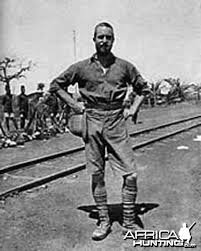
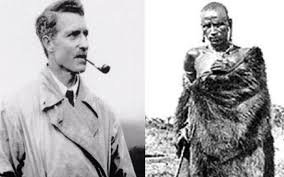
The British decapitated Koitalel’s body and took his head to London as proof of his death, as well as a gruesome trophy of colonialism.His death marked the end of the Nandi resistance as they could no longer fight having lost their greatest Orkoiyot.
The railway building continued uninterrupted through Nandi.He was succeeded by his brother Kipeles Arap Tamasun, while his son Barsirian Arap Manyei (born in 1882) later became the Nandi leader from 1919 -1922 when he was detained by the British.
He was released in 1964 making him the longest-serving political prisoner in Kenyan history.A museum has been built to commemorate Koitalel and his efforts. The County Government of Nandi in collaboration with the University of Nairobi is currently constructing a university in his name.

 Mtu Kuzi
Leave a comment